
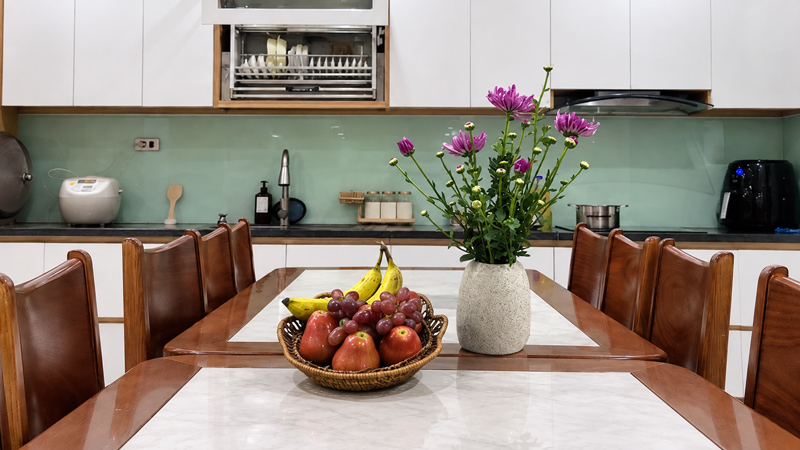
Well-chosen kitchen vases can transform the look and feel of a kitchen, from food preparation areas to dining tables and kitchen islands. Beyond their decorative appeal, flower vases help bring together the colors, materials, and interior design elements, creating a warm and inviting atmosphere for everyday living.
Ideal Places to Display Flower Vases in the Kitchen
Place flower vases on the kitchen counter near a window
The kitchen counter near a window is an ideal spot for displaying small to medium-sized flower vases. An elegant vase for kitchen table can be paired with a fresh flower arrangement and neatly organized kitchen essentials to create a balanced and visually pleasing look.
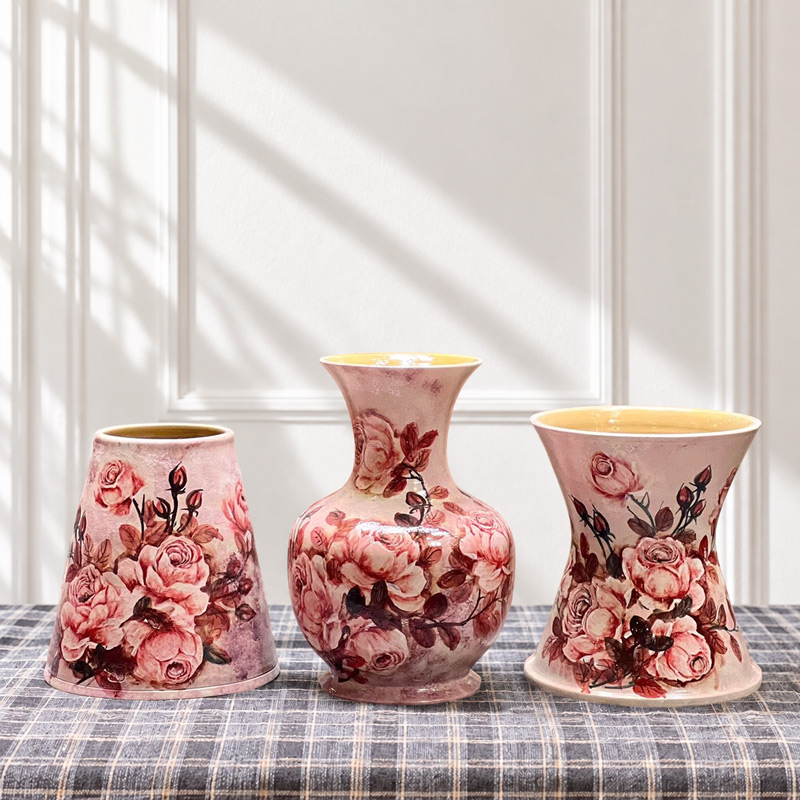
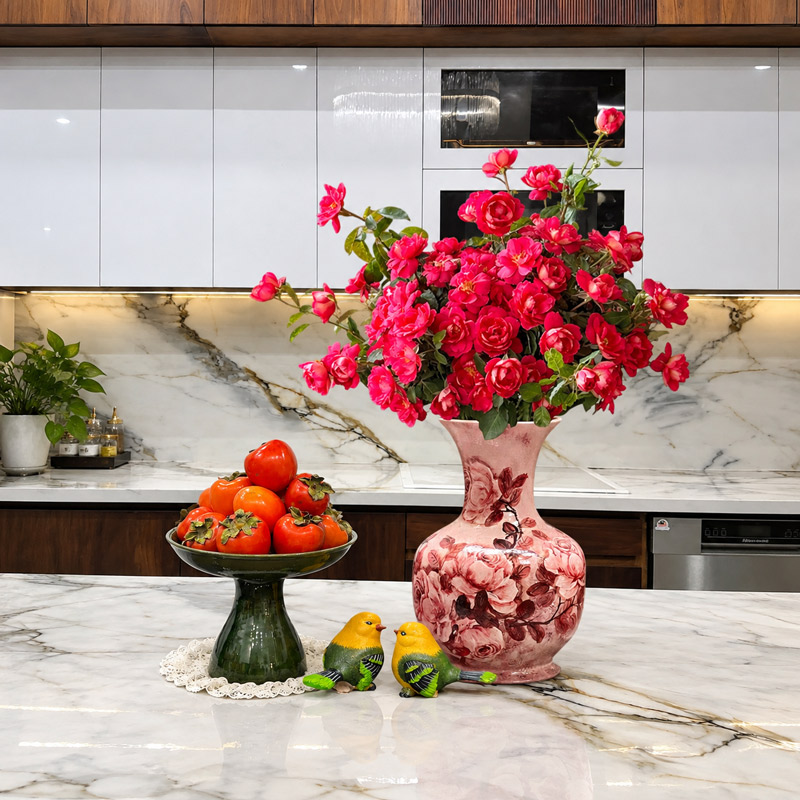
When choosing kitchen counter vases, consider the width of the countertop and the distance between the vase and cooking appliances. Rounded vases, narrow-neck designs, and bottle-shaped styles work well in unused corners because they take up relatively little space. In a modern kitchen, a simple white vase pairs easily with stone countertops and kitchen cabinetry. By contrast, a hand-painted floral ceramic vase or one in a deeper glaze can introduce a classic touch to a kitchen featuring natural wood.
Displaying flower vases on the kitchen island
Kitchen islands often occupy a central position or serve as a visual focal point in modern kitchens. A well-chosen flower vase can help connect the cooking area with the dining space and the rest of the living area. When choosing a vase for kitchen island, consider the size of the island, the height of the vase, and the amount of space needed for food preparation.
On a spacious kitchen island, a large vase for kitchen island with a full-bodied shape or a tall silhouette can create a striking focal point, especially when paired with flowers featuring naturally long stems. If the island is frequently used for food preparation or casual breakfasts, a flower vase for kitchen island in a moderate size offers greater flexibility. Position the vase toward one side or in an area used less frequently to preserve enough countertop space for everyday tasks.
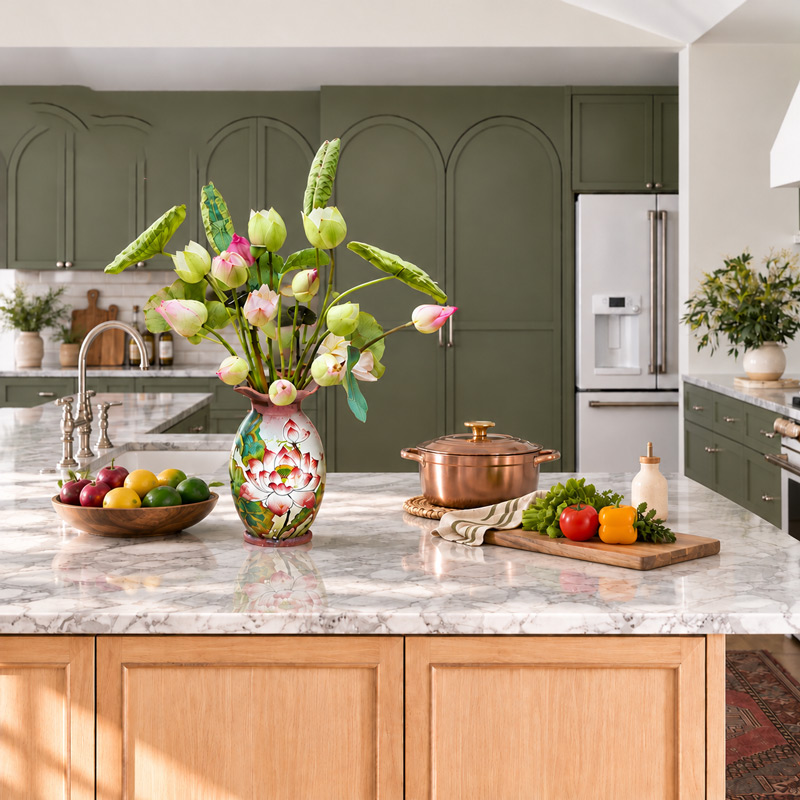
White stone countertops and light-colored cabinets pair well with blue and white ceramic vases, earthy brown vases, or hand-painted designs. In kitchens with dark wood cabinetry, a white kitchen vase can create a subtle contrast. For minimalist interiors, modern vases with geometric shapes help maintain a clean, uncluttered look while adding a decorative accent to the island.
Placing flower vases in the center of the kitchen dining table
Flower vases on the dining table create a warm and welcoming atmosphere for family meals. A dining table vase adds color to the table while complementing dinnerware, table linens, and other decorative accents. The most common placement is at the center of the table.
When choosing a flower vase for dining table, the proportions of the vase in relation to the table should be considered first. Small dining tables generally work well with low-profile vases with compact shapes. For longer tables, you can use one vase as the main focal point or arrange a group of small bud vases with matching patterns. This arrangement creates visual rhythm while leaving enough room for plates, glasses, and dining utensils.

A vase centerpiece for dining table that complements the interior style can give the entire dining area a more cohesive and polished look. For example, a blue and white vase works well in classically styled spaces, while white vases help bring out the colors of flowers in modern kitchens.
Decorating open kitchen shelves with flower vases
Open shelves are often used to display plates, cups, spice jars, and decorative accessories. Adding kitchen vase decor to these arrangements helps soften the straight lines of shelving and cabinetry while creating a visual connection between everyday kitchen essentials and decorative accents.
Mini vases, narrow-neck vases, and patterned ceramic vases are generally easy to incorporate into open shelving arrangements. If the shelves already feature plenty of colorful tableware, solid-colored vases can provide visual breathing room. On the other hand, flower vases with botanical motifs work well on shelves featuring wooden pieces, ceramics, and other natural materials.
Medium-sized decorative vases for kitchen spaces can also be displayed beside a stack of plates or a group of cups, provided they do not obstruct access to these items. Place each vase on a stable, level surface, keep it a safe distance from the shelf edge, and avoid positioning it directly above food preparation areas.
To create a cohesive look throughout the kitchen, choose vases in colors that complement cabinet handles, backsplash tiles, or dinnerware. Repeating colors and materials in moderation helps kitchen decor vases blend naturally with the surrounding interior.
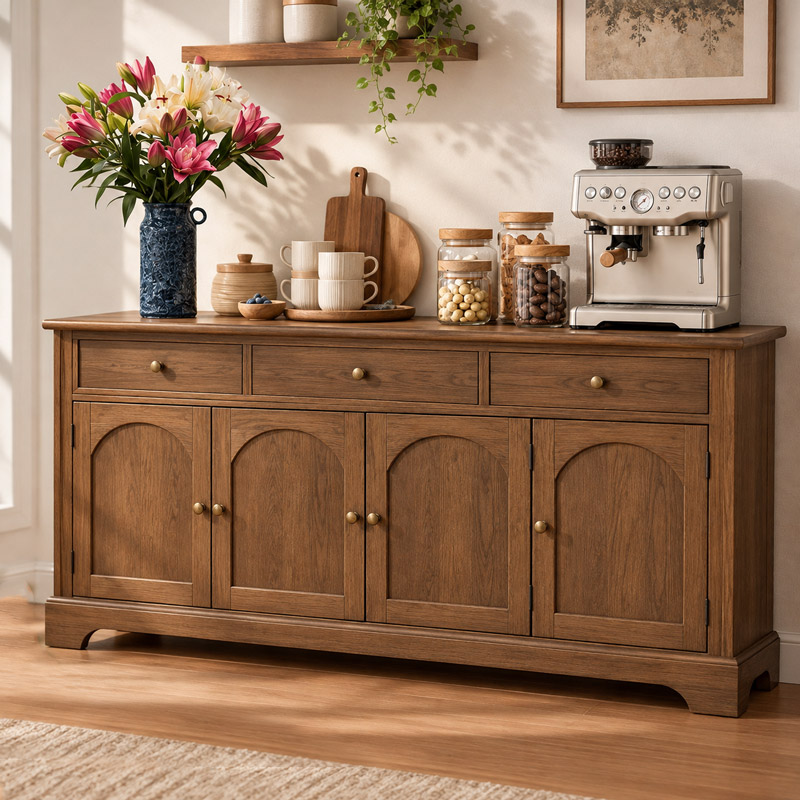
Displaying flower vases on sideboards and wall-side countertops
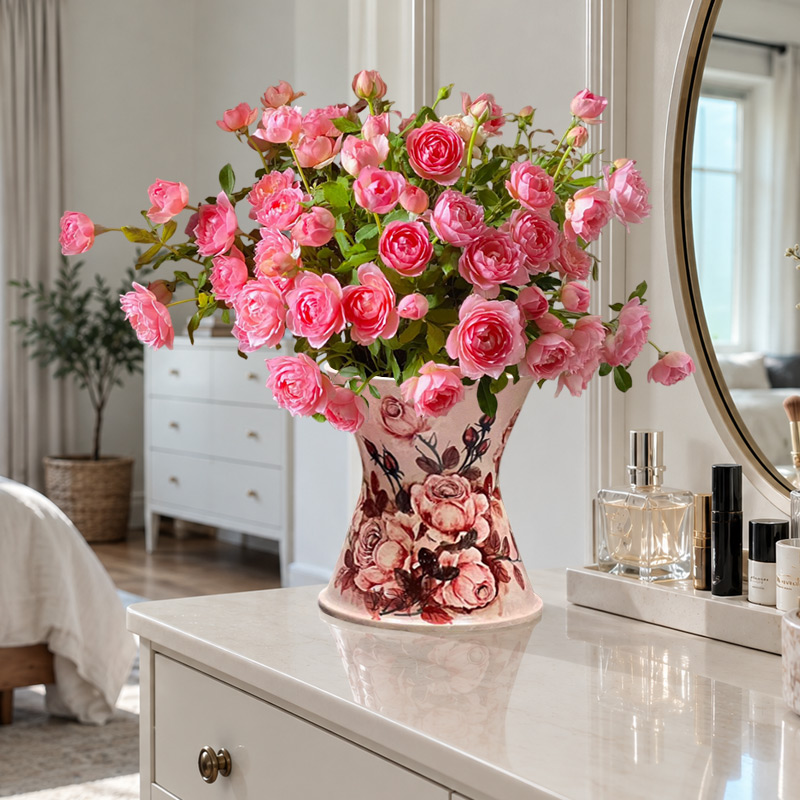
In kitchens with side cabinets, buffet units, or sections of countertop that are rarely used, flower vases can help make these areas feel less bare. These spots are particularly suitable for vases with distinctive silhouettes, hand-painted patterns, or eye-catching glaze colors.
Tall vases can be displayed beside wall art or decorative mirrors, while rounded vases work well in low, wide arrangements. For farmhouse or vintage interiors, consider ceramic vases in ivory, muted blue, or warm brown glazes. In modern kitchens, vases with simple geometric forms and minimal decoration help maintain a lighter, more streamlined look.
In kitchens with upper cabinets, the space above the cabinets can also be used to display larger decorative vases. Vases on top of kitchen cabinets and tall, tapered designs work best when there is enough clearance between the cabinet tops and the ceiling. However, this area tends to collect dust and can be difficult to clean. Choose decorative vases that do not need to hold water, make sure they are positioned securely, and use this display area only when the vases can be reached safely for regular cleaning.




Choosing and Arranging Flower Vases for the Kitchen
Choosing vase shapes and sizes for different areas
When choosing a kitchen vase, consider the available display space, the height of nearby furniture, and the intended use of each area. A well-chosen vase not only enhances the beauty of the flowers but also creates a balanced look alongside countertops, cabinetry, and surrounding kitchen items. Rather than choosing a vase based on appearance alone, decide where it will be displayed first, then look for a design that meets both your aesthetic and practical needs.
For kitchen countertops and open shelves with limited space, slim vases, narrow-neck designs, and bottle-shaped vases are generally easier to arrange. These styles can hold a few fresh flower stems or decorative foliage without taking up too much room needed for kitchen essentials or food preparation. In kitchens with neutral color schemes, a white kitchen vase or a blue and white ceramic vase can introduce a subtle decorative accent. By contrast, kitchens with plenty of colors and patterns tend to work better with vases featuring simpler designs, helping maintain a harmonious overall look.
Choosing fresh flowers and dried flowers for kitchen spaces
Decorative flowers should be selected according to the available natural light, how frequently each area is used, and how much time you can devote to their care. Fresh flowers bring natural color into the kitchen and can be changed with the seasons. Dried and artificial flowers are practical options for open shelves, sideboards, and other spots where changing vase water regularly may be inconvenient. When pairing flowers with a kitchen flower vase, consider their colors, stem shapes, and proportions in relation to the vase to create a balanced arrangement.
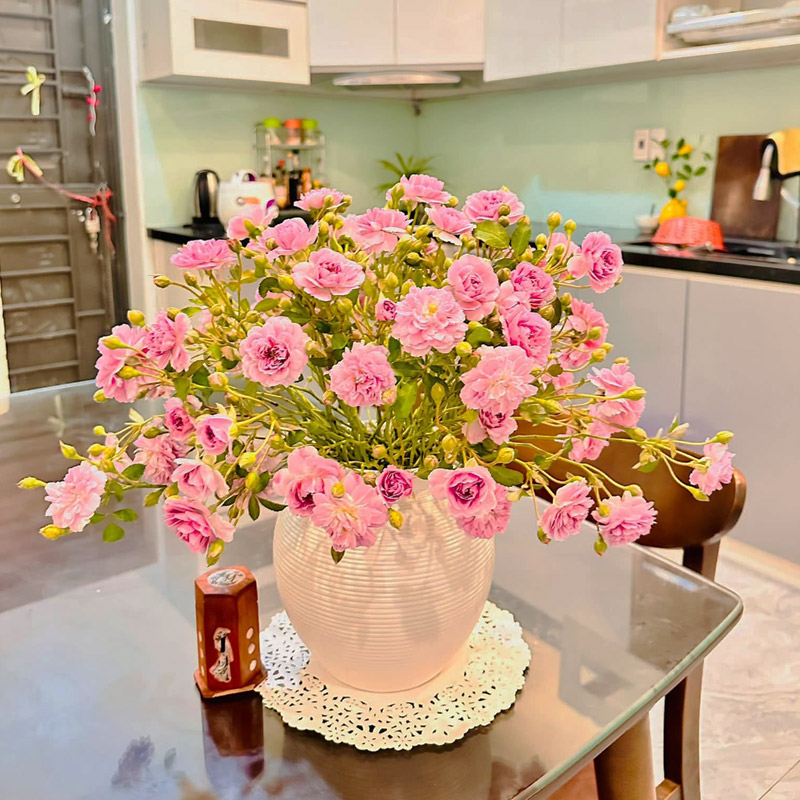
Fresh flowers in soft shades such as white, pale pink, creamy yellow, and green tend to coordinate easily with dinnerware and table linens. If you choose fragrant flowers, consider the strength of their scent to ensure it does not interfere with the enjoyment of meals.
Dried grasses, dried flowers, and preserved branches pair well with neutral-colored ceramic vases to create a natural, rustic look. Artificial flowers and silk flowers are also suitable for long-term displays, as they can remain in place for months without regular flower care. Whether you use dried or artificial flowers, regular cleaning is still important to prevent dust from accumulating in areas used for food preparation.
Matching flower vases with kitchen design styles
To make flower vases feel like a natural part of the interior, choose designs that complement the kitchen’s colors, materials, and lines. A vase that looks beautiful on its own may not suit the overall space if its shape or glaze color contrasts too sharply with the surrounding furnishings. When exploring kitchen vase decor, consider the room’s dominant style before deciding on vase shapes and flower arrangements.
In modern kitchens, vases with clean lines, smooth surfaces, and neutral colors tend to pair well with flat-panel cabinets, stone countertops, and metal appliances. White, light gray, or black vases can create different decorative accents depending on the colors used throughout the interior.
In vintage-style kitchens, hand-painted ceramic vases, blue and white flower vase designs, and pieces inspired by traditional pottery can add depth to the decor. Floral motifs, birds, and classic borders complement cabinets with decorative details and kitchen accessories with a nostalgic feel. In this setting, the vase does not have to match every color in the kitchen. A subtle contrast in glaze color can make the display area stand out.

Farmhouse kitchens often combine natural wood, creamy white tones, and materials with rustic textures. Ceramic vases shaped like traditional water jugs, rounded vases, and pitcher vase designs all suit this style. Arrange them with wildflowers, leafy branches, or dried flowers to preserve the natural feel. A kitchen jug vase with a handle and a silhouette reminiscent of a traditional water jug can bring an extra sense of warmth and familiarity to the space.
For cottagecore kitchens, flower vases with botanical patterns, soft colors, and gently curved shapes complement interiors rich in natural textures. Small flowers, daisies, and seasonal blooms look lovely in relaxed arrangements that avoid overly symmetrical compositions. Meanwhile, kitchens with an eclectic style can accommodate colorful vases and distinctive shapes, provided they share a common element, such as color, material, or motif, to keep the overall look cohesive.
Where to Avoid Placing Flower Vases in the Kitchen
Along with choosing suitable vases and flowers, it is important to consider where they are displayed to ensure convenience and safety in the kitchen. This area is frequently exposed to temperature changes, steam, grease, and food preparation activities. Therefore, a vase for kitchen use should be placed somewhere with minimal risk of being knocked over, easy access for cleaning, and no interference with everyday tasks.
First, avoid placing flower vases close to gas stoves, electric cooktops, or appliances that generate significant heat. High temperatures can cause fresh flowers to wilt more quickly, dry out stems, and affect certain decorative materials. Dried flowers and artificial flowers made from fabric or yarn should also be kept away from heat sources, as their materials may become damaged or lose their shape.
Areas beside the sink also require careful consideration. Vases placed too close to the faucet may be splashed with dirty water, knocked over while washing dishes, or disturbed during food preparation. If you want to decorate the countertop near the sink, place the vase in a less frequently used corner, on a flat and stable surface, and at a reasonable distance from the main work area.
Avoid placing flower vases directly in areas used for chopping ingredients, mixing food, or setting out ingredients before cooking. Loose petals, fallen leaves, and water from the vase could contaminate food, while the vase itself takes up valuable workspace. For multifunctional kitchen islands, consider reserving one end specifically for decorative displays.
Flower vases should also be kept a safe distance from the edges of countertops and shelves. Tall vases, wide-mouthed designs, and arrangements with spreading bouquets should be chosen with the stability of the base in mind. On open shelves and above kitchen cabinets, avoid displaying vases that are excessively heavy or difficult to reach for cleaning. If a vase is placed at a height, make sure it can be taken down safely for regular maintenance.
Finally, proper vase care helps keep the kitchen clean. Vases holding fresh flowers need regular water changes and cleaning


