
The lotus has long been cherished as a powerful symbol of spiritual beauty and inner strength across many cultures around the world. In particular, throughout Asia, the lotus is more than just a beautiful flower, it has become an enduring artistic motif found in paintings, architecture, sculpture, and handcrafted ceramics. From delicate small vases designed for a single bloom to large decorative ceramic vases, lotus patterns bring a sense of elegance, tranquility, and timeless beauty to any space.
When exploring the meaning of lotus flowers, it quickly becomes clear that their appeal goes far beyond graceful petals or delicate colors. For thousands of years, the lotus has been admired for the values it represents. Although it grows from the muddy bottom of a pond, it rises above the water to bloom in perfect purity, untouched by the mud below. This remarkable journey has made the lotus flower symbol a universal representation of purity, resilience, renewal, and hope.
In this article, we’ll explore the otus flower and meaning in greater depth, discover the symbolism behind different lotus colors on a ceramic flower vase, and learn why this timeless floral motif continues to hold a special place in ceramic art and home décor around the world.
What Does the Lotus Flower Mean? Why Has It Become a Timeless Symbol in Ceramic Art?
From traditional handcrafted pottery to contemporary ceramic designs, the lotus has remained one of the most beloved decorative motifs among artisans. Its appeal goes far beyond its graceful appearance. As a timeless lotus flower symbol, it carries rich cultural and spiritual meaning, transforming an ordinary ceramic vase into a piece of art with a story to tell.

Meaning of lotus flowers: What does the lotus symbolize
At first glance, the lotus is simply a beautiful aquatic plant admired for its elegant petals and delicate fragrance. However, a closer look at the lotus meaning reveals why this remarkable flower has been celebrated across cultures and religions for thousands of years.
Perhaps the most recognized meaning of the lotus is purity. Although its roots grow deep in muddy water, the flower rises above the surface and blooms with spotless beauty. This extraordinary transformation is why the meaning for lotus flower is often associated with overcoming challenges, staying true to one’s values, and finding beauty even in difficult circumstances.
The lotus is also widely recognized as a symbol of peace and balance. Its perfectly layered petals create a sense of harmony that naturally evokes feelings of calmness and serenity. For this reason, many people choose a hand painted ceramic vase featuring lotus motifs to create a relaxing atmosphere in their living room, bedroom, or personal workspace.
Another important aspect of the meanings of the lotus flower is renewal and personal growth. The flower closes its petals at night and opens again with the morning light, making it a powerful symbol of new beginnings, hope, and the opportunity to start each day with renewed purpose. This natural rhythm has inspired artists and philosophers for centuries.
Beyond these meanings, the lotus also represents wisdom and spiritual awakening. It has long been associated with Buddhist teachings, where the flower symbolizes the journey toward enlightenment and inner peace. This enduring symbolism explains why lotus motifs continue to appear in temples, traditional artwork, and handcrafted ceramics throughout Asia.
When these symbolic qualities are expressed on a ceramic vase, the result is much more than a decorative object. Each lotus pattern reflects a story of resilience, harmony, and hope. For many collectors and home décor enthusiasts, a lotus ceramic vase is a meaningful way to bring the beauty of nature together with timeless cultural values into everyday living spaces.
Both the lotus and ceramic art celebrate the beauty of nature
Ceramics are born from four essential elements: earth, water, fire, and the skilled hands of an artisan. The lotus follows a similarly remarkable journey. It grows from the muddy bottom of a pond, draws strength from water and sunlight, and blossoms gracefully above the surface. Although their origins are different, both ceramics and the lotus are beautiful expressions of nature’s ability to transform simple materials into something extraordinary.
This shared connection is one of the reasons the lotus as a symbol has become a lasting source of inspiration in ceramic art. When a lotus motif is carefully hand painted on natural clay, it creates a beautiful harmony between organic materials and the elegance of the natural world. The finished piece reflects not only artistic craftsmanship but also a deep appreciation for nature’s quiet beauty.
Unlike patterns chosen purely for decoration, the lotus flower symbol tells a meaningful story. It represents growth, resilience, and the ability to rise above life’s challenges while remaining graceful and true to itself. These qualities give a ceramic vase greater emotional value, allowing it to become more than a decorative object. It becomes a piece that brings nature, artistry, and meaningful symbolism into everyday life.
Lotus flower symbol brings a sense of peace to living spaces
Today’s homes are designed to be more than beautiful. They are also places where people seek comfort, balance, and a sense of calm. This is why ceramic vases decorated with lotus motifs have become a popular choice for living rooms, bedrooms, home offices, spa spaces, meditation rooms, and other relaxing environments.
The soft curves of the lotus petals, combined with gentle colors and handcrafted ceramic textures, create a soothing visual effect that helps a room feel more peaceful and inviting. Even without fresh flowers, a lotus ceramic vase can stand beautifully on a bookshelf, coffee table, console, or display cabinet, adding quiet elegance to the surrounding space.
Many interior designers also appreciate the lotus flower symbol for its timeless appeal and its strong connection to nature. It pairs effortlessly with design styles such as Japandi, Wabi Sabi, Scandinavian, and contemporary interiors with Asian influences, bringing warmth, simplicity, and a sense of mindfulness to modern living spaces.
Lotus Flower Representation Across Different Cultures
Although the lotus is the inspiration behind countless works of art around the world, its symbolism is interpreted differently across cultures. Each country has its own traditions, beliefs, and stories surrounding the flower. Yet despite these differences, the lotus flower representation consistently reflects some of humanity’s most admired values, including purity, wisdom, resilience, harmony, and spiritual growth.

The lotus in Buddhism: A Symbol of enlightenment
In Buddhism, the lotus is one of the most sacred and recognizable symbols. It represents purity, wisdom, and the journey of rising above life’s challenges to achieve enlightenment and inner peace. Just as the lotus blooms beautifully above muddy water, it reminds people that personal growth often comes through perseverance and self-discovery.
Throughout Asia, lotus imagery appears in temples, sacred architecture, Buddhist paintings, and statues of the Buddha seated or standing upon a lotus throne. These artistic traditions have made the lotus an enduring symbol of serenity and spiritual awakening.
For this reason, ceramic vases featuring lotus motifs are often chosen to create peaceful, meditative spaces. Whether displayed in a living room, meditation room, or quiet reading corner, they bring a sense of balance, mindfulness, and calm into the home.
The lotus in Hinduism: A Symbol of creation and divine beauty
In Hinduism, the lotus represents creation, beauty, prosperity, and divine energy. It is closely associated with several important deities, most notably Lakshmi, the goddess of wealth and abundance, and Brahma, the creator god. Both are traditionally depicted seated upon a blooming lotus, symbolizing purity, spiritual power, and the emergence of life from the divine.
Because of this rich symbolism, the lotus has become a timeless source of inspiration in Indian art and craftsmanship. Ceramic artisans often incorporate lotus motifs into their work to express elegance, creativity, and the harmonious relationship between nature and spirituality.
Egyptian lotus flower symbol: A Sign of rebirth and eternal life
In ancient Egyptian civilization, the Egyptian lotus flower symbol held a unique meaning closely connected to life, light, and rebirth. The flower most commonly associated with this symbolism is the Blue Egyptian Lotus (Nymphaea caerulea), an aquatic plant that opens its petals with the morning sun and gently closes them as evening falls. This daily cycle reminded the ancient Egyptians of the sun’s journey across the sky and its return each new day.
As a result, the blue lotus became a powerful symbol of renewal, hope, and the endless cycle of life. It frequently appeared in temple carvings, wall paintings, tombs, and ceremonial objects alongside gods and sacred rituals, expressing beliefs in spiritual transformation, the immortality of the soul, and the promise of new beginnings.
Today, this symbolism continues to inspire artists and designers around the world. When the lotus motif is featured on a ceramic vase, it represents far more than decorative beauty. It reflects optimism, personal growth, and the strength to embrace change while looking toward the future with confidence.
The lotus in Vietnamese culture
For the Vietnamese people, the lotus is far more than a beautiful flower. It is a lasting symbol of integrity, resilience, and the nation’s cultural identity. Growing from muddy waters while blooming with remarkable purity, the lotus reflects the values of kindness, perseverance, and moral strength. These qualities have made it one of the most cherished symbols in Vietnamese culture for generations.
Lotus motifs appear throughout Vietnamese poetry, painting, architecture, religious traditions, and especially in traditional ceramic art. Renowned pottery villages such as Bat Trang, Chu Dau, and Phu Lang have incorporated lotus patterns into their handcrafted ceramics for centuries. Each region interprets the flower in its own distinctive style, ranging from simple hand painted designs to intricate carved and embossed motifs that showcase the remarkable skill of local artisans.
A ceramic vase decorated with lotus patterns is more than a decorative accent. It represents the connection between traditional craftsmanship, the beauty of nature, and the cultural heritage that continues to inspire Vietnamese ceramic art today.
The lotus in Japanese art
In Japanese art, the lotus symbolizes purity, tranquility, and the quiet strength to rise above adversity. It frequently appears in paintings, ceramics, and traditional gardens, reflecting a deep respect for nature and the pursuit of inner balance. Japanese artists often pair the lotus with koi fish, bamboo, cranes, or still water to create harmonious compositions that evoke peace and contemplation.
On Japanese style ceramic vases, lotus motifs are typically expressed through clean brushwork and a restrained color palette. Rather than emphasizing elaborate details, artisans focus on graceful forms, subtle textures, and the beauty of empty space. This artistic approach reflects the philosophy of Wabi Sabi, which celebrates simplicity, authenticity, and the beauty found in natural imperfections.
The lotus in Chinese art
In Chinese culture, the lotus has long been admired as a symbol of purity, integrity, harmony, and a fulfilling life. Its elegant form represents the balance between outward beauty and inner character, making it one of the most meaningful floral motifs in traditional Chinese art.
For centuries, lotus patterns have appeared on porcelain, ceramic vessels, ink paintings, and decorative crafts. Chinese artisans often combine the lotus with koi fish, swallows, mandarin ducks, lotus leaves, or flowing water to create compositions rich in symbolic meaning. Each element conveys heartfelt wishes for happiness, prosperity, family unity, good fortune, and lasting abundance.
This rich artistic tradition continues to influence contemporary ceramic design. Whether interpreted through classic blue and white porcelain or modern hand painted pottery, lotus motifs remain a timeless expression of beauty, cultural heritage, and the enduring relationship between nature and art.
The Meaning of Lotus Flower Colors on Ceramic Vases
The beauty of the lotus lies not only in its elegant form but also in the meaning behind each color. Every shade carries its own symbolism, expressing different emotions, values, and cultural traditions. When these colors are brought to life on a hand painted ceramic vase, they add depth and personality to the design, making it easier to choose a piece that reflects both your interior style and the message you wish to convey.
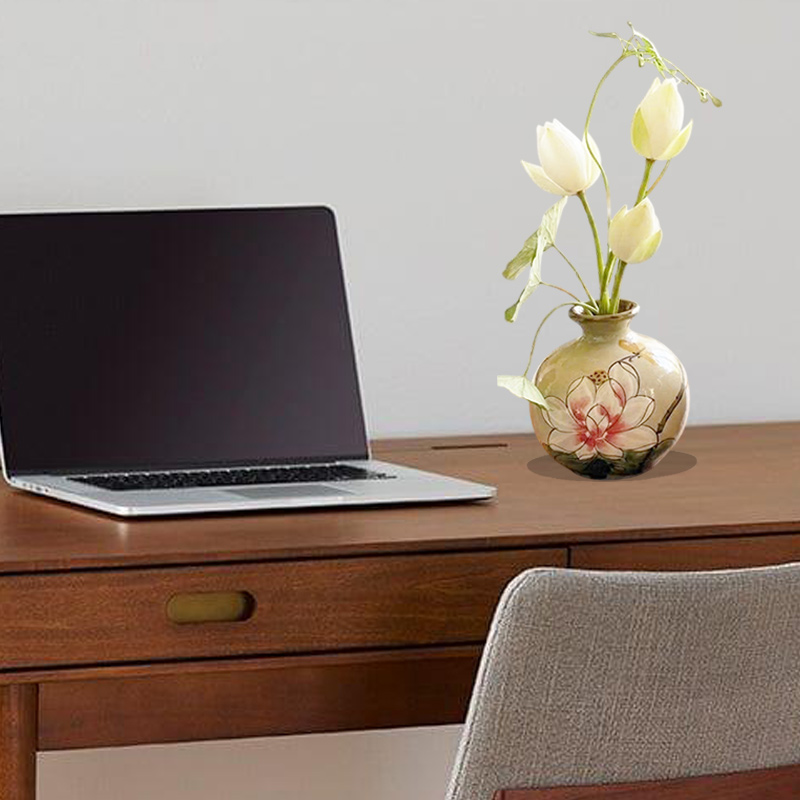
White lotus meaning: A Symbol of purity and inner peace
Among all lotus colors, white is one of the most popular choices in home décor. The meaning of white lotus flower is closely associated with purity, peace, sincerity, and a clear, peaceful mind. Its soft, understated beauty creates a calming presence that never feels overwhelming.
When white lotus motifs are painted on a ceramic vase, the natural texture of the clay beautifully complements the flower’s graceful form. Together, they create a timeless piece that brings warmth and serenity to any room. White lotus ceramic vases work especially well in minimalist, Japandi, and Wabi Sabi interiors, while also enhancing living rooms, bedrooms, reading nooks, and meditation spaces. Whether displayed with fresh flowers or admired on their own, they help create an atmosphere of balance and a stronger connection to nature.
Red lotus flower symbolism: A Symbol of love and compassion
According to the meaning of red lotus flower, the red lotus symbolizes sincere love, compassion, and meaningful human connections. Unlike many bold red flowers that express passion and intensity, the red lotus carries a gentler, more heartfelt energy. Across many cultures, it also represents kindness, generosity, and the willingness to share warmth and positivity with others.
When featured on a ceramic vase, red lotus motifs create a striking focal point while preserving a sense of elegance and refinement. They transform an ordinary vase into a meaningful decorative piece that celebrates love, appreciation, and lasting relationships. For this reason, ceramic vases with red lotus designs are often chosen for living rooms, dining areas, or as thoughtful gifts for housewarmings, weddings, anniversaries, and birthdays. Beyond their artistic beauty, they carry heartfelt wishes for happiness, harmony, and a life filled with meaningful connections.
Pink lotus meaning: A Symbol of nobility and enlightenment
The pink lotus is widely regarded as the most sacred lotus in many Eastern traditions. The meaning of a pink lotus flower is closely connected with nobility, wisdom, compassion, and the pursuit of spiritual growth. According to pink lotus symbolism, it represents the harmony between outward beauty and inner character, reminding us that true elegance comes from both appearance and the heart.
When pink lotus motifs are hand painted on a ceramic vase, they create a refined and sophisticated look with lasting artistic appeal. Soft pink tones and graceful floral lines allow the vase to blend effortlessly with a wide range of interior styles, from traditional homes to contemporary living spaces. A pink lotus ceramic vase is especially suited for living rooms, reading corners, meditation spaces, or anywhere that calls for a peaceful atmosphere. It also makes a meaningful gift, expressing heartfelt wishes for happiness, inner peace, and a fulfilling life.
Blue lotus meaning: A Symbol of wisdom and spiritual awakening
According to the blue lotus meaning, the blue lotus represents wisdom, knowledge, and a lifelong pursuit of learning. Across many ancient civilizations, particularly in blue lotus Egyptian meaning, this remarkable flower was also associated with rebirth, light, and spiritual strength. Today, blue lotus flower symbolism continues to represent clarity of mind, resilience, and the journey of personal growth.
Beyond its cultural significance, the blue lotus spiritual meaning is closely connected with mental awakening and a deeper understanding of oneself. It encourages mindfulness, emotional balance, and the ability to remain calm amid the demands of everyday life. For this reason, blue lotus flower spiritual meaning is often linked to inner peace, self-discovery, and finding harmony in a busy world.
When featured on a ceramic vase, blue lotus motifs create an elegant and refreshing visual presence. Soft blue tones paired with handcrafted ceramic textures evoke a sense of tranquility while bringing a natural, calming atmosphere into the room. These vases are especially well suited for home offices, bookshelves, reading corners, or study spaces where they can inspire focus, creativity, and thoughtful reflection.
Purple lotus meaning: A Symbol of grace and creativity
According to the meaning of purple lotus flower, the purple lotus symbolizes grace, creativity, and spiritual depth. For centuries, the color purple has been associated with elegance, refinement, and artistic expression. Combined with the timeless beauty of the lotus, it represents the harmonious balance between wisdom, emotion, and inner peace.
In decorative art, purple lotus motifs are admired for their ability to feel both delicate and distinctive. When hand painted on a ceramic vase, the soft purple petals create an eye catching focal point while maintaining an elegant and sophisticated appearance. A purple lotus vase complements artistic, contemporary, and vintage interiors, making it an excellent choice for anyone who appreciates creativity and wants to express a unique sense of style through home décor.
Yellow lotus meaning: A Symbol of success and prosperity
The meaning of yellow lotus flower is often associated with success, wisdom, optimism, and positive energy. Its radiant golden tones symbolize prosperity, good fortune, and the rewards that come from dedication and perseverance. Because of these uplifting associations, the yellow lotus meaning is closely connected with personal growth, confidence, and a bright future filled with opportunity.
Ceramic vases decorated with yellow lotus motifs are often chosen as meaningful gifts for housewarmings, grand openings, and other special celebrations. Beyond their decorative beauty, they express heartfelt wishes for success, abundance, happiness, and lasting prosperity, making them both a thoughtful present and an elegant addition to any home.
Green lotus meaning: A Symbol of growth and hope
The green lotus flower meaning is closely associated with growth, renewal, and the promise of new beginnings. Its fresh green tones reflect the vitality of nature while symbolizing balance, harmony, and continuous personal development. Because of these uplifting qualities, the green lotus meaning is often used in art to represent sustainable growth and the enduring connection between people and the natural world.
When portrayed on a ceramic vase, green lotus motifs bring a refreshing sense of life and tranquility to a space. Their calming color and organic beauty make them an excellent choice for living rooms, reading nooks, home offices, or any setting designed to encourage relaxation and well-being. A green lotus ceramic vase creates a welcoming atmosphere that feels both peaceful and full of positive energy.
Black lotus symbolism: A Symbol of mystery and individuality
Unlike other lotus colors, the black lotus does not exist naturally. Instead, it is a symbolic motif found in art, literature, and contemporary design. Black lotus symbolism is often associated with mystery, inner strength, independence, and the courage to embrace one’s individuality. It also represents personal transformation and the journey of overcoming challenges to discover one’s true self.
On a ceramic vase, black lotus motifs create a bold yet sophisticated statement. Their dramatic appearance adds depth and character while maintaining a refined sense of elegance. These vases pair beautifully with minimalist, contemporary, and industrial interiors, where every decorative element reflects the homeowner’s unique personality and artistic taste.
Today, people choose ceramic vases decorated with lotus motifs for far more than their visual appeal. Each design carries a meaningful story inspired by centuries of cultural tradition and artistic expression. Whether the lotus symbolizes purity, wisdom, hope, prosperity, or resilience, it brings a sense of purpose as well as beauty into the home. This timeless significance is exactly why the symbol of a lotus flower continues to inspire artists, collectors, and homeowners across generations.